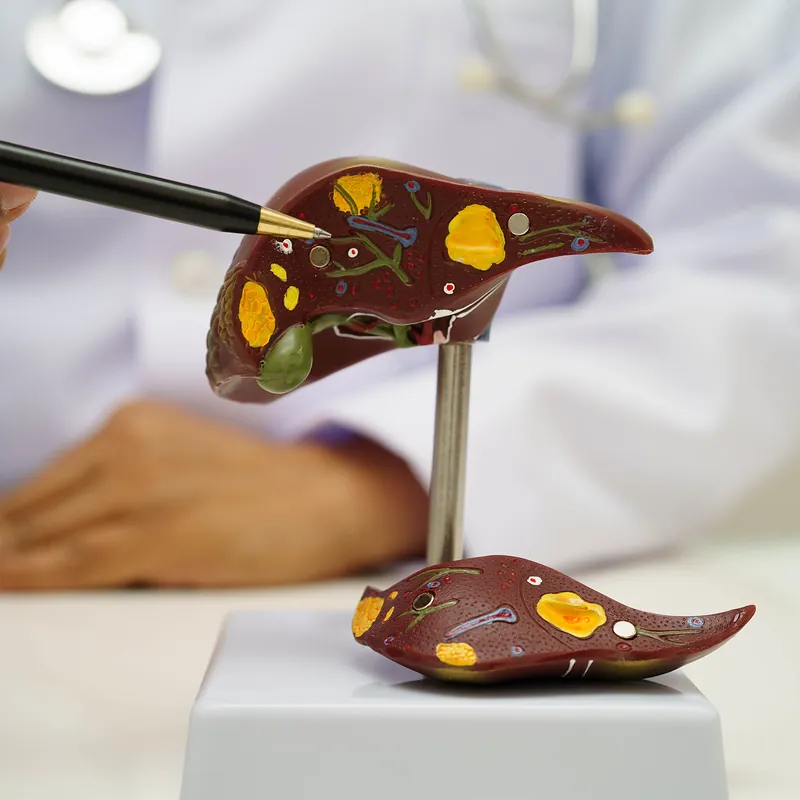
Hepatitis

Inflammation of the liver, most often from a virus. A and E usually clear, B can become long term, and C can now usually be cleared — once it is found.

Viral hepatitis, hepatitis A, hepatitis B, hepatitis C, hepatitis E, hep A, hep B, hep C, HAV, HBV, HCV, HEV, liver infection, jaundice

£45 · 20 minutes

Same-day availability

6am to 10pm, seven days

Assessed and treated by a GMC-registered GP

Prescriptions, sick notes and referral letters included

A written treatment plan after every appointment

Your Summary Care Record in the room, with your consent

Clinically reviewed by Dr Mohammad Zubair Khan · Last reviewed

September 25, 2026

Book a consultation

A 20-minute appointment with a GMC-registered GP for £45. No membership required.

Private GP care led personally by Dr Mohammad Zubair Khan, GMC 7563469.

Why patients choose Cheshire Clinics

GMC registered doctors badge - every Cheshire Clinics consultation is with a General Medical Council registered GP

GMC-registered

Care led personally by Dr Khan

Royal College of General Practitioners badge - RCGP trained private GP consultations at Cheshire Clinics

RCGP-trained

Attentive, unhurried care that listens properly

Google five star reviews badge - Cheshire Clinics private GP online

Highly rated by patients

Five-star Google reviews from the people we have looked after

Regulated by the Care Quality Commission

CQC-registered

Registered with the Care Quality Commission

Same-Day Appointments
Sick Notes
Private Prescriptions
Blood Tests
Menopause & HRT
Weight Management
Mental Health
Specialist Referrals
Same-Day Appointments
Sick Notes
Private Prescriptions
Blood Tests
Menopause & HRT
Weight Management
Mental Health
Specialist Referrals

In short

  • Hepatitis means an inflamed liver, most often caused by a virus.
  • Hepatitis B and C are often silent: only a blood test tells you.
  • We cannot treat hepatitis online; new yellow skin or eyes needs same-day, in-person care.
  • Call 999 for any sign in the 999 box, such as yellow skin with confusion.

Call 999 if

  • You have jaundice (yellow skin or eyes) with confusion, drowsiness or unusual behaviour
  • You vomit blood, or your poo is black and tarry
  • You have jaundice with a high temperature and shivering, or severe tummy pain
  • You have taken too much paracetamol: go now, even if you feel well

Overview

Hepatitis means inflammation of the liver. The most common cause is a virus — hepatitis A, B, C or E — but alcohol, fatty liver disease, some medicines and the immune system can all cause it too.

The viruses behave very differently, which is why the letter matters:

  • Hepatitis A spreads through contaminated food, water and hands, often abroad. It can make you unwell for weeks, but it clears on its own and never becomes long term. A vaccine prevents it
  • Hepatitis B spreads through blood and sex, and from mother to baby at birth. Most adults clear it; some carry it for life. A vaccine prevents it
  • Hepatitis C spreads through blood, and usually causes no symptoms for years while it damages the liver. Tablets now clear it in more than 9 out of 10 people
  • Hepatitis E in the UK usually comes from undercooked pork, and is usually mild

Two points matter above all. New yellowing of the skin or eyes (jaundice) needs same-day, in-person assessment. And hepatitis B and C are silent — only a blood test tells you, and free NHS testing is easy to get, including a hepatitis C test at home.

We cannot give hepatitis vaccines or treat hepatitis, but we can assess symptoms and risk, arrange and explain testing, and make sure a positive result reaches the NHS services that treat it.

Common symptoms

Often, no symptoms at all

Most people with hepatitis B or C have no symptoms for years, and most young children with hepatitis A never feel ill. Feeling well does not rule hepatitis out.

A new infection

It often starts like flu, for about a week — tiredness, aches, a high temperature, feeling or being sick, loss of appetite, and pain in the upper right side of the tummy. Some people also have diarrhoea, joint pains or an itchy raised rash (hives). Then, in some:

  • Yellow skin and whites of the eyes (jaundice) — on brown or black skin, the whites of the eyes show it first and most clearly
  • Dark urine and pale stools
  • Itchy skin

These symptoms usually last a few weeks, although tiredness can take months to lift.

Long-term hepatitis B or C

  • Usually no symptoms for many years
  • Tiredness, and sometimes itching, low mood and difficulty concentrating
  • Eventually, signs of liver damage — swelling of the tummy or ankles, bruising easily, yellowing, vomiting blood, or confusion

Causes and risk factors

Hepatitis A

  • Spread from faeces to mouth — contaminated food or water, food handled by someone infected, and close contact, including sex. Outbreaks have been linked to shellfish, frozen berries and salad
  • Common in parts of Africa, Asia, the Middle East, and Central and South America, so travel is a common source
  • Higher risk: travellers, gay and bisexual men, and people who inject drugs. People with long-term liver disease become more seriously ill
  • Symptoms start about four weeks after infection, and it is most infectious in the two weeks before jaundice appears

Hepatitis B

  • Spread through blood and body fluids — sex without a condom, shared needles or drug equipment, needlestick injuries, unsterilised tattoo, piercing, medical or dental equipment, and shared razors or toothbrushes. It is not spread by hugging, coughing, or sharing cups and cutlery
  • From mother to baby at birth, which is why all pregnant women in the UK are offered screening
  • Most people with long-term hepatitis B in the UK caught it at birth or in early childhood in a country where it is common, including sub-Saharan Africa, Asia, the Middle East, and parts of Eastern Europe and South America
  • It becomes long term in about 9 in 10 babies infected at birth, but only about 1 in 20 adults

Hepatitis C

  • Spread through blood — most often shared equipment for injecting drugs, even once, years ago — and shared straws or notes for snorting drugs, razors or toothbrushes
  • Medical or dental treatment, tattoos or piercings with unsterile equipment, particularly in parts of Asia, Africa, the Middle East, and Eastern and Southern Europe, where it is more common
  • A blood transfusion in the UK before 1996, or blood products before 1986
  • Less often, sex — mainly where blood may be present, between men, or with HIV — and from mother to baby. It is not spread by hugging, kissing, or sharing food or drink

Hepatitis E, and D

  • Hepatitis E in the UK usually comes from undercooked pork or pork products. It can be serious in pregnancy, in older people and in people with liver disease, and in someone with a weakened immune system it can become long term
  • Hepatitis D only affects people who already have hepatitis B, so hepatitis B vaccination prevents it too

When it is not a virus

Fatty liver disease, linked to weight and blood sugar, is now the commonest cause of abnormal liver tests in the UK — see obesity. Alcohol, some medicines and supplements, a paracetamol overdose, glandular fever and autoimmune hepatitis can all inflame the liver.

How it is diagnosed

Hepatitis is diagnosed with blood tests, which show which virus is responsible and, for hepatitis B and C, whether the infection is still active.

Liver function tests

A liver function test shows whether the liver is inflamed — ALT is often very high in a new infection — but not why. It can be completely normal in long-term hepatitis B or C, so a normal result does not rule them out.

Tests for each virus

  • Hepatitis A — an antibody test (IgM) showing a recent infection
  • Hepatitis B — the surface antigen (HBsAg) shows a current infection, and if it is still present after six months, the infection is long term. Other tests show past infection or immunity from a vaccine
  • Hepatitis C — an antibody test shows whether you have ever been infected; a second test for the virus itself (HCV RNA) shows whether it is still there, because some people clear it on their own
  • Hepatitis E — checked among the tests for a new, unexplained hepatitis

Tests can miss a very recent infection. Hepatitis C antibodies take 5 to 12 weeks to appear, and hepatitis B surface antigen usually shows within two to three months, so a repeat test at about three months after a possible exposure — and for hepatitis C, sometimes at six — gives a reliable answer. After a diagnosis, specialists check for scarring (fibrosis) with blood tests, an ultrasound and a painless liver stiffness scan.

Jaundice has other causes

  • Gallstones blocking the bile duct — usually with pain, and with fever and shivering if the duct is infected
  • Cancer of the pancreas or bile duct — NICE advises urgent referral for anyone aged 40 or over with jaundice, to rule it out; see pancreatic cancer
  • Medicines, herbal and bodybuilding supplements, and alcohol
  • Malaria and other infections caught abroad
  • Gilbert's syndrome — a harmless inherited variation, in about 1 in 20 people, that causes mild yellowing during illness or fasting

How we treat it online

Viral hepatitis is not something we can treat remotely. Jaundice needs to be seen in person, long-term hepatitis B and C are treated by NHS liver specialists, and we cannot give vaccines or any injection.

Where we can help

  • Assessing symptoms and risk — and sending you for same-day in-person care if you have jaundice or warning signs, rather than booking tests
  • Arranging testing at a Randox Health clinic near you (see how blood tests work): a liver function test, and hepatitis B and C tests within our STI and sexual health screen, or a blood-only screen with an HIV test and syphilis
  • Explaining the results — a positive hepatitis C antibody needs a second test before anything is certain, and the hepatitis B test in these screens shows current infection, not whether a vaccine has made you immune
  • Vaccine advice for travel or ongoing risk, and where to get vaccines free — see travel health
  • Checking your medicines — some medicines and supplements strain the liver, and hepatitis C tablets interact with a number of common medicines

If a test is positive

We cannot refer you into NHS liver services ourselves — that goes through your NHS GP, or an NHS sexual health clinic or drug service if you use one (see specialist referrals). With your consent, we write to your GP the same day with the result and what needs to happen next, so you are not left to pass it on yourself.

Acute viral hepatitis is a notifiable disease. Any doctor who suspects it, including us, must tell the local health protection team, who offer a vaccine to close contacts where one helps.

How the NHS treats it

  • Hepatitis A and E — rest, fluids, no alcohol, and blood tests until the liver settles. Usually no specific treatment is needed
  • A new hepatitis B infection — supportive care and specialist follow-up; most adults clear it
  • Long-term hepatitis B — monitoring and, for some people, antiviral tablets such as tenofovir or entecavir taken long term, or a course of peginterferon injections. These control the virus and protect the liver, but rarely clear it
  • Hepatitis C — antiviral tablets taken daily for 8 to 12 weeks, clearing it in more than 9 in 10 people, with few side effects

What we will not do is manage new jaundice by video, or keep repeating private tests when what you need is a referral into NHS liver services.

Hands holding a digital thermometer, for infections and fever
Important

When to seek urgent help

Call 999 or go to A&E for:

  • Jaundice with confusion, drowsiness or unusual behaviour — signs the liver may be failing
  • Vomiting blood, or black, tarry stools
  • Jaundice with a high temperature and shivering, or severe tummy pain
  • Having taken too much paracetamol — go now, even if you feel well

Get same-day, in-person medical help — an urgent GP appointment, or NHS 111 — for:

  • New yellowing of the skin or the whites of the eyes, dark urine, or pale stools
  • Symptoms of hepatitis if you are pregnant, over 60, or have liver disease
  • Vomiting that will not settle, or being unable to eat or drink much
  • A fever after travel abroad — say where you have been

Go to A&E or a sexual health clinic the same day after:

  • A needlestick injury, or blood splashed into your eyes, mouth or a cut
  • Unprotected sex with someone who has hepatitis B, or where HIV is a possibility — hepatitis B vaccine works best within 24 hours, and HIV prevention treatment must start within 72 hours

Book an appointment for:

  • A past risk of hepatitis B or C, and never having been tested
  • Abnormal liver tests that nobody has explained
  • Travel plans, to work out which vaccines you need
  • A positive result from a home test or another provider that you want explained

We are not an emergency service — see what to do in an emergency.

Prevention and self-care

Vaccination

  • Hepatitis A — for travel to countries where it is common, gay and bisexual men, people who inject drugs, people with long-term liver disease, and some jobs. One dose protects for about a year; a second, 6 to 12 months later, for at least 25 years. Ideally have it two weeks before you travel, though it is still worth having up to the day you leave
  • Hepatitis B — part of the routine 6-in-1 vaccine for babies in the UK since 2017. Adults at higher risk need a course of two to four injections, and faster schedules exist when protection is needed quickly
  • After contact with hepatitis A or B, a prompt vaccine can prevent infection — within 14 days for hepatitis A, and ideally within 24 hours for hepatitis B
  • There is no vaccine for hepatitis C, and none available in the UK for hepatitis E

We cannot give vaccines ourselves — see do you give vaccinations? for where to get them.

Reducing the risk

  • Abroad, drink bottled or boiled water, avoid ice, raw shellfish, and salads or fruit you have not peeled yourself, and wash your hands before eating
  • Cook pork and pork products thoroughly
  • Use condoms, and never share needles, syringes, spoons, filters, straws or notes — drug services and needle exchanges provide clean equipment free
  • Do not share razors or toothbrushes, and use only licensed tattoo and piercing premises

If you have hepatitis

  • Avoid alcohol while the liver is inflamed; with long-term hepatitis B or C, cutting right down or stopping protects the liver
  • Ask before taking any painkiller, medicine or supplement. Paracetamol may need a lower dose, or avoiding, while the liver is inflamed
  • With hepatitis A, stay off work, school or nursery until 7 days after jaundice started (or 7 days after symptoms started, if there is no jaundice), and do not prepare food for others
  • With hepatitis B or C, cover cuts, do not share razors or toothbrushes, use condoms, and tell partners and the people you live with so they can be tested — and vaccinated against hepatitis B
  • With hepatitis C, ask about hepatitis A and B vaccines, which protect the liver from a second infection
  • Keep to a healthy weight and stop smoking, both of which help protect the liver

NHS or private

NHS testing for viral hepatitis is free, and hepatitis B and C are treated through NHS specialist services. For many people the free route is the best one:

  • Your NHS GP can test you and refer you to NHS liver services
  • Sexual health clinics test for hepatitis B and C confidentially without a referral, and vaccinate people at increased risk against hepatitis B
  • In England, anyone aged 18 or over can order a free, confidential hepatitis C home test from the NHS website — a finger-prick sample posted to a laboratory, with an NHS professional in touch if it is positive
  • In Wales, Sexual Health Wales posts free home test kits that include hepatitis B and C
  • Drug and alcohol services test for hepatitis and link people into treatment
  • Travel vaccines — hepatitis A is usually free from your GP surgery after a travel risk assessment; hepatitis B for travel usually has to be paid for

What paying adds is speed and convenience — a confidential assessment the same day, a blood test at a clinic near you, and a GP who explains the result and what happens next, including an abnormal liver test from elsewhere — see results interpretation.

Where the NHS is clearly better is everything after a positive result. Hepatitis B and C are treated and monitored in NHS specialist services; a private test does not change that route, it only reaches it sooner.

Evidence and guidelines

NICE Clinical Knowledge Summaries on hepatitis A, B and C underpin this page, including antibody then HCV RNA testing for hepatitis C, and specialist referral for everyone with active hepatitis B or C.

The UKHSA Green Book, chapters 17 and 18, sets out hepatitis A and B vaccination: who needs it, the schedules, and vaccination after exposure.

NICE PH43, Hepatitis B and C testing, recommends testing people born or brought up where the infections are common, anyone who has ever injected drugs, and other groups at increased risk.

NICE CG165 (chronic hepatitis B) and the NICE appraisals of hepatitis C antivirals, including TA430 and TA499, cover the specialist treatments described here.

UKHSA, Hepatitis C in England 2025, estimates about 50,200 adults were living with chronic hepatitis C in England in 2024, more than 60% fewer than in 2015, with elimination as a public health threat the aim by 2030.

UKHSA guidance on hepatitis E links UK cases with pork and pork products. NICE NG12 recommends a suspected cancer referral for anyone aged 40 or over with jaundice.

Common questions

Is hepatitis contagious?

Viral hepatitis is, but each type spreads differently. Hepatitis A and E spread through contaminated food, water and hands; hepatitis B through blood, sex and from mother to baby; hepatitis C mainly through blood. Hepatitis caused by alcohol, fatty liver or medicines is not contagious.

Can hepatitis be cured?

Hepatitis C can usually be cleared — daily tablets for 8 to 12 weeks clear it in more than 9 in 10 people. Clearing it does not stop you catching it again. Hepatitis A and E usually clear on their own. Long-term hepatitis B cannot usually be cured, but treatment controls it and protects the liver.

How can I get tested for free?

Through your NHS GP or a sexual health clinic, or, if you are 18 or over and live in England, with the free NHS hepatitis C home test ordered online. In Wales, Sexual Health Wales posts free home kits that include hepatitis B and C.

I had a blood transfusion before 1996. Should I be tested?

Yes, if you have not been tested already. The NHS advises anyone who had a blood transfusion in the UK before 1996 and has not been tested to contact their GP surgery about a hepatitis C test. People infected through NHS blood or blood products may be entitled to support and compensation.

Do I need a hepatitis vaccine to travel?

Often hepatitis A, depending on where you are going, and it is usually free from your GP surgery. Hepatitis B is advised for longer stays and some activities, and usually has to be paid for. We can go through your itinerary, but we cannot give vaccines.

Can I drink alcohol if I have hepatitis?

Not while the liver is inflamed. With long-term hepatitis B or C, cutting right down or stopping protects the liver and slows damage.

Dr Mohammad Zubair Khan, GMC-registered private GP and founder of Cheshire Clinics
Clinically reviewed by Dr Mohammad Zubair Khan, GMC 7563469
Last reviewed

September 25, 2026

How it works

What happens when you book

£45 for a 20-minute appointment with a GMC-registered GP, 6am to 10pm, seven days a week. Membership is optional and never required.
Cheshire Clinics online GP appointment booking confirmation on mobile
01

Book your appointment

Pick a time that suits you — 6am to 10pm, seven days a week, including weekends and bank holidays. £45 for 20 minutes, self-pay, with no insurance to arrange.
5–10 minutes
Online video consultation with a GMC-registered private GP
02

Meet your GP

A 20-minute video or phone consultation with a GMC-registered GP — long enough for a proper conversation about your symptoms, your history and what matters to you.
20 minutes
Diagnostic testing plan including blood test panel, ECG and urine screening
03

Tests and referrals, if you need them

Where testing will actually answer the question, we arrange it — blood tests and health screening through our laboratory partner, or a referral for ultrasound, X-ray, CT or MRI through private imaging providers. We will also tell you when a scan is not the right next step.
1–7 days
Personalised results and treatment plan from a private GP consultation
04

Results and next steps

Your GP talks you through what the results mean and agrees the next step with you. Every consultation ends with your treatment plan in writing, and any prescription goes to your own pharmacy.
20 minutes
GP follow-up reminder for ongoing care and progress monitoring
05

Ongoing care and follow-up

Follow-up appointments, progress monitoring and ongoing advice — including saying plainly when something needs in-person or NHS care instead.

Ongoing

How we compare

Time to be seen

Appointment length

Your NHS record in the room

Written treatment plan

Told when a test isn’t needed

Cost

Varies by practice

Typically 10 minutes

Yes, your full record

Not routinely

Usually

Free

Same day

Often 10 to 15 minutes

Usually not

Sometimes charged

Varies by provider

Varies. Some offer subscriptions

Questions about our service

How quickly can I be seen?

Same-day access is usually available, from 6am to 10pm, seven days a week. You choose a time that suits you rather than waiting on hold at 8am.

Will I see the same doctor each time?

Yes. Care is led personally by Dr Mohammad Zubair Khan, so you are not passed between clinicians. Continuity is the point of a small practice: someone who knows your history and is listening attentively rather than working through a checklist.

Can you see my NHS records?

Yes, with your consent. We can access your Summary Care Record during the consultation, so your current medications, allergies and significant history are in the room. That means fewer questions you have already answered elsewhere, and safer prescribing.

Are you trying to replace my NHS GP?

No. We are not here to replace GPs, only to support them. Your NHS practice remains responsible for your ongoing care, and with your consent we write to them after the consultation. We are useful when you need to be seen sooner, or want more time than a standard appointment allows.

What is included in the appointment?

Twenty unhurried minutes and a comprehensive assessment. A written treatment plan is included, along with any prescription, sick note or referral letter arising from the consultation, at no extra charge.

How much does it cost?

£45 for 20 minutes, self-pay. Membership is optional and never required. The price is the same at weekends and on bank holidays.

What does “treatable online” actually mean?

It means the diagnosis can usually be made from your history and photographs, and that treatment can be arranged safely without examining you. Where a condition is not marked treatable online, it is because examination is the diagnosis — listening to a chest, feeling an abdomen, examining an ear or a joint — or because a procedure or device is needed.

Can you prescribe antibiotics?

Yes, where there is a genuine bacterial infection — cellulitis, impetigo, bacterial urine infections, confirmed strep throat. We will also frequently tell you that you do not need one. Most sore throats, coughs, colds and earaches are viral, and an antibiotic gives you the side effects with none of the benefit.

What if the GP cannot help with what I need?

If your problem turns out to be genuinely outside what we can do remotely, the doctor will tell you straight away, point you to the right service, and refund your fee in full. We would rather do that than fill twenty minutes to justify the charge.

What should I do in an emergency?

Call 999 or go to A&E — do not book an online appointment and do not wait for a reply to an email. For urgent problems that are not emergencies, NHS 111 is available 24 hours a day, online or by phone, and can direct you to the right service.

Patient reviews

What our patients say

Excellent and reliable service always! I was consulted by Dr Khan, who listened to my concerns and advised promptly. One of the best clinics I've booked with

Waqar Q.

Google

Excellent service, friendly staff, and a clean environment.

Husnain J.

Google

Really happy with the care I received from Dr Khan. He was thorough, explained the treatment clearly and made sure I understood what to do next. The whole appointment felt professional yet relaxed, and I left feeling confident about my care. I'd recommend him to friends and family without hesitation.

Sajeel T.

Google

Very cooperative staff!!!

Rana H.

Google

Cheshire Clinics is a wonderful addition to the community. The team is professional, welcoming, and genuinely committed to providing quality healthcare. It's great to see a clinic focused on making patients feel comfortable, valued, and well cared for. Wishing Dr. Khan and the entire team all the very best for this exciting new journey. Highly recommended!

Waseem A.

Google